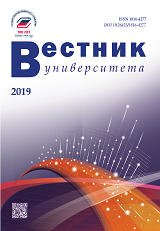
It is published since 1999. The Journal’s mission consists in support the interest of readers to the original research and innovative approaches in the area of economics and sociology, that contribute to the dissemination of the best domestic and foreign practice in these areas. Target audience of the journal covers of representatives of the expert community, scientists, university professors, graduate students and other people interested in issues covered in the journal.
The journal is included in the Higher Attestation Commission (HAC) List (CATEGORY 2) of peer-reviewed scientific publications intended to publish the main scientific results of dissertations for the degree of candidate of science and the degree of doctor of science, recommended by the Higher Attestation Commission under the Ministry of Science and Higher Education of the Russian Federation in the following areas:
- 5.2.1. Economic Theory (Economic Sciences),
- 5.2.2. Mathematical, Statistical, and Instrumental Methods in Economics (Economic Sciences),
- 5.2.3. Regional and Sectoral Economics (Economic Sciences),
- 5.2.4. Finance (Economic Sciences),
- 5.2.5. Global Economy (Economic Sciences),
- 5.2.6. Management (Economic Sciences),
- 5.3.1. General Psychology, Personality Psychology, History of Psychology (Psychological Sciences),
- 5.3.3. Occupational Psychology, Engineering Psychology, Cognitive Ergonomics (Psychological Sciences),
- 5.3.4. Educational Psychology, Psychodiagnostics of Digital Educational Environments (Psychological Sciences),
- 5.3.5. Social Psychology, Political and Economic Psychology (Psychological Sciences),
- 5.3.7. Developmental Psychology (Psychological Sciences),
- 5.4.1. Theory, Methodology, and History of Sociology (Sociological Sciences),
- 5.4.2. Economic Sociology (Sociological Sciences),
- 5.4.3. Demography (Sociological Sciences),
- 5.4.4. Social Structure, Social Institutions, and Processes (Sociological Sciences),
- 5.4.5. Political Sociology (Sociological Sciences),
- 5.4.6. Sociology of Culture (Sociological Sciences),
- 5.4.7. Sociology of Management (Sociological Sciences).
The journal "Vestnik Universiteta" has been published since 1999. Its mission is to foster reader interest in original research and innovative approaches in economics, sociology, and psychology, thereby promoting the dissemination of best domestic and international practices in these fields. The journal's target audience includes representatives of the expert community, scientists, university professors, graduate students, undergraduates, and other individuals interested in the issues covered in the journal.
The journal was registered with Roskomnadzor under No. 77-1361 on December 10, 1999.
Current issue
CURRENT ISSUES OF MANAGEMENT
The study examines the specifics of using artificial intelligence technologies in UN projects and the associated ethical challenges. The study focuses on the practices of United Nations agencies, as it is in international organizations that the use of AI faces heightened demands for transparency, human rights protection, and accountability.
Based on an analysis of regulatory documents, research publications, and opensource UN materials, key AI tools used in UN projects were examined, including big data analysis, forecasting, text processing, and satellite imagery. Three case studies UNDP, UNICEF, and the World Food Programme are examined in detail, revealing the specific ethical risks involved: data bias, privacy threats, liability uncertainty, and the impact of technological infrastructure on vulnerable groups. Particular attention is paid to the tension between the desire for innovation and the need to exercise caution when working in a humanitarian context. It is shown that despite the availability of UNESCO recommendations and UN strategic documents, regulatory approaches remain fragmented, and their implementation is uneven.
The conclusion is drawn regarding the need to strengthen unified ethical standards and implement quality control mechanisms for AI systems at all stages of the project cycle, from planning to results evaluation. The relevance of such measures increases as the scale of process automation increases internationally.
The article examines the possibilities of using artificial intelligence systems in managing employee adaptation processes in modern organizations. Artificial intelligence is interpreted as a digital tool integrated into the human resource management system and performing functions of diagnostics, support, monitoring, and optimization of the adaptation process.
The purpose of the study is to identify and systematize the functional capabilities of artificial intelligence implemented in digital solutions used in employee adaptation management. The methodological basis of the research is a functional analysis of digital platforms and intelligent systems applied in corporate employee adaptation and training programs.
The empirical part of the study is based on the analysis of functional characteristics of digital HR solutions without involving respondents. As a result of the study, typical models of artifi intelligence implementation in employee adaptation programs were identified, and their managerial capabilities and limitations were determined. The scientific novelty of the study lies in the systematization of managerial functions of artificial intelligence systems in the employee adaptation process and in identifying the specifics of their use in modern digital HR practices.
The results obtained can be applied in the design and modernization of employee adaptation, onboarding, and personnel development systems in organizations.
STRATEGIES AND INNOVATIONS
The article is devoted to the study of the features of the use of adaptive strategies in the management of an organization in the context of international business. Unlike traditional approaches focused on stability and predictability, adaptive strategies are seen as a company’s systemic ability to ensure sustainable operation and development in a situation of multidimensional uncertainty. The article reveals the role of dynamic abilities, strategic dexterity and international ambidexterity in the formation of a comprehensive framework for adaptive strategizing. It is emphasized that it is not individual responses to crisis phenomena that become important, but holistic mechanisms for recognizing changes, using new opportunities, and restructuring the organizational architecture.
Special attention is paid to the tools for implementing adaptive strategies. Scenario planning, the theory of real options, and the robust approach are considered as a method of reducing the risks of erroneous decisions and providing flexibility in multiple scenarios. The organizational forms of adaptability implementation are also analyzed, from structural solutions involving the allocation of specialized units to contextual practices that form an environment for combining research and operational tasks.
Based on the analysis of scientific sources in recent years, the author’s model of adaptive strategic management has been developed, which integrates market and non-market strategies, including ESG and digital solutions, and also considers the institutional differences of the countries of presence. The results obtained allow us to consider adaptability as a key factor in increasing the innovative productivity and competitiveness of organizations in the international environment.
The article presents the results of a study aimed at analyzing the communicative activity of regional creative clusters in the Russian Federation within the «Vkontakte» social network. The relevance of the study stems from the growing role of creative clusters as a key factor in the development of the regional creative economy, as well as their inclusion among the priority areas of Russia’s state cultural and economic policy.
The study conducted a content-behavioral analysis of the official communities of creative clusters using the LiveDune analytics service, which enabled the identification of distinctive features in content composition, publication dynamics, and audience responses to various types of materials and formats of visual content presentation. Based on the obtained data from digital communities of creative clusters located in diverse regions and operating under varying institutional and spatial conditions, recommendations were formulated for the thematic content of digital channels, and a conceptual model of marketing communications management for creative clusters was developed. This model delineates a cyclical system of interrelations among communication objectives, content strategies, and responses from target audiences.
The research findings can be applied to the formation and optimization of communication and marketing strategies for creative clusters, while also holding practical value for further marketing and interdisciplinary studies in the management and development of the creative economy.
The article examines the relationship between innovative technological development and economic sovereignty of the Russian Federation in the context of external economic pressure and sanctions. The research methodology includes: generalization of theoretical approaches of foreign and domestic scientists on the relationship between innovation and economic growth; comparative analysis of indicators of scientific and technological development of the Russian Federation and leading countries of the world; assessment of regional differentiation of innovative activity in the Russian Federation; study of the regulatory framework of innovative technological development of the Russian Federation.
The current state of the scientific and technological sphere of Russia is analyzed, including the dynamics of resource provision: the share of expenditure on science in GDP, the number of researchers, the volume of domestic expenditure on research and development. Particular attention is paid to the legal analysis of key documents defining strategic priorities in the field of innovative technological development, including the Strategy for Scientific and Technological Development of the Russian Federation and the Concept of Technological Development until 2030. The study identified the main problems hindering the achievement of technological sovereignty: low level of science funding, outflow of qualified scientific personnel, unevenness of innovative activity across the regions of the country. Continued dependence on imported critical technologies and equipment.
Based on the analysis, areas for improving public policy are proposed, including: balanced support for the entire innovation cycle of technology development, development of small technology companies, digitalization of scientific and technological development management processes, strengthening the competitive selection and evaluation of research and innovation projects, and attracting extra-budgetary funding sources. It is substantiated that reaching a new level of innovative and technological development is a necessary condition for ensuring the economic sovereignty of the Russian Federation.
In the context of the digital transformation of the IT services sector, traditional reactive management approaches demonstrate limited effectiveness, necessitating the search for high-tech tools to overcome information asynchrony and data fragmentation. The purpose of this research is to develop a target seven-layer architecture of an intelligent digital twin (IDT) as a strategic intelligent asset for a modern service organization.
The methodological basis of the work is a systems approach to the design of complex organizational and economic objects. The international architectural framework, the DTC Platform Stack, is used as the key analytical toolkit, transformed by the author into a comprehensive management methodology for the development of a socio-economic system. In the course of the research, an original multi-layered IDT architecture was designed, ensuring the seamless integration of both tangible and, most importantly, key intangible organizational assets with their virtual representations within a single decision-making loop. An organizational and economic management mechanism based on the synergy of AI-technologies and personnel competencies is substantiated. It is proven that the implementation of IDT minimizes subjectivity in strategic decision-making by integrating artifi intelligence algorithms into the virtual representation layer.
The developed architecture serves as a foundation for forming a “roadmap” for the digital transformation of service companies, providing predictive control of financial and economic indicators. The practical implementation of the proposed approach contributes to the increased competitiveness of IT service enterprises through the transition to a proactive management model and adaptive adjustment of operational cycles in real time.
DEVELOPMENT OF INDUSTRY AND REGIONAL MANAGEMENT
Conceptual approaches to assessing the competitiveness of the electrical engineering industry using inter-industry balances have been proposed. The importance of the electrical engineering industry’s products has been evaluated, and their diversity and the need to identify weak industries have been noted.
Based on the analysis of the electrical engineering industry’s import dependence, it has been concluded that it is necessary and relevant to address the issues of ensuring its technological sovereignty. A mechanism for determining the composite competitiveness index (CCI-2024) of the Russian economy has been presented. Methods and mechanisms for identifying priority critical technologies and research areas in the field of electrical engineering have been discussed. An economic and mathematical model of cost optimization of factors of increasing the competitiveness of the industry is presented. A method of increasing the objectivity of assessments using regression analysis, calculating the correlation coefficients of the influencing factors and sales revenue, and analyzing statistical data on price and non-price factors. Based on the presented model and technology of SPACE-analysis of assessing the situation in the markets, an example of the format of choosing a competitive strategy for the production of products in the electrical engineering industry is given.
Based on the formation of the target function of the production system index, which is defined as a set of indicators of the technical condition of production assets, resources, and human capital, mechanisms for assessing the economic efficiency of investments in innovative projects in the electrical engineering industry and predictive analysis of its development are proposed. The significance of production factors is proposed to be assessed using the alternative hierarchy matrix (AHM). To assess production risks, it is proposed to use FMA analysis technologies. The article presents scientific approaches and technologies for macroand microeconomic indicators that characterize the competitiveness of the Russian economy, the electrical engineering industry, import substitution, and ensuring technological sovereignty.
The article presents a system dynamics simulation model for forecasting the effectiveness of strategic human resource management practices in the public sector. The model is developed based on empirical data collected in 2025 in the Volgograd region (a survey of 1,250 civil servants, 45 in depth interviews, 8 focus groups, and reports from control and audit bodies).
Key model variables include the integral index of HR practices, employee engagement (UWES-9), the share of appointments from the personnel reserve, and the achievement of national project KPIs. Parameter calibration is performed, and three scenarios (inertial, baseline, optimistic) are analyzed up to 2028. It is found that the inertial scenario does not move the system out of the critical zone (average integral index in 2028 – 2,32). The baseline scenario (step-by-step implementation of a set of measures) ensures an increase in the average integral index from 2,04 to 3,50 (+ 72 %), the share of appointments from the reserve from 18% to 60%, engagement from 2,9 to 4,1 points, and KPI achievement from 65 % to 82 %.
Sensitivity analysis reveals the greatest influence of the speed of HR analytics implementation and top management support. The probability of achieving an average integral index > 3.0 is estimated at 0,97 (Monte Carlo method). The model can be used by regional competence centers to justify HR decisions.
This article provides a comprehensive assessment of the current transformation of regional tourism policy management models in the Russian Federation. The aim of the study is to identify and analyze the forms of interaction that arise during the transition from hierarchical to network-based governance mechanisms.
It is determined that these governance models are not “transitional” forms of modern polycentric models and network-based governance technologies commonly implemented today, but rather represent an independent concept of “hybrid institutional sustainability.” The research methodology includes institutional and comparative analysis, as well as the development of an analytical tool—a factor analysis matrix for the institutional-network transformation of regional tourism policy. Based on empirical data from regions with varying tourism potential, it is shown that network interaction is realized primarily in hybrid forms, where the state is the architect of the strategic-level network, while horizontal connections are activated to address tactical challenges.
The study’s results demonstrate a differentiation in governance models: in high-potential regions, corporate-state coordination predominates; in medium-potential regions, managed hybridization with project-based, targeted engagement of businesses and local communities is dominant; and in low-potential regions, network interaction is declarative in nature. The study emphasizes that hybrid models do not blur hierarchy but rather enhance its adaptability, creating sustainable institutional configurations. Theoretically, it expands network governance theory, offering a framework for analyzing complex, hybrid, and asymmetric forms of governance. Future research opportunities lie in the development of adaptive regulatory frameworks and digital platforms for ongoing communication and management interactions between participants.
In the context of modern geopolitical challenges and sanctions pressure, the problem of ensuring economic security at the municipal level is becoming particularly relevant. The aim of the study is to develop a comprehensive system of strategic directions for the socio-economic development of the Belebeyevsky District of the Republic of Bashkortostan, focused on strengthening the economic security of the territory.
The methodological basis of the study was a systematic approach, methods of comparative, structural and dynamic analysis, statistical methods of information processing. The empirical base of the study was formed by the data of the Territorial Body of the Federal State Statistics Service for the Republic of Bashkortostan for the period 2018-2024, strategic and program documents of the municipal and regional levels. As a result of the study, systemic imbalances in the economy of the district were identifi manifested in mono-structural dependence on the automotive industry, insufficient diversification of industrial production, demographic challenges expressed in natural decline and migratory outflow of the population, as well as insufficient level of development of social infrastructure.
The scientific novelty of the research lies in the development of a comprehensive approach to ensuring the economic security of a municipal district through the prism of strategic diversification of the economy and the development of human capital. The practical signifi ce of the work is the formation of specifi recommendations for improving municipal economic policy aimed at creating a sustainable and balanced model of territorial development.
This article is devoted to the problem of developing the resource potential of the tourist and recreational complex of the Altai Republic, the effective functioning of which is playing an increasingly important role in the modern socio-economic conditions of the country’s reorientation towards domestic tourism. The study reveals the importance of resource potential in the development of the tourist and recreational sphere of the region.
The analysis of the development of the resource potential of the tourist and recreational complex in the region allowed us to identify positive and constraining factors that are a guideline for developing priority areas for its development in order to make the most complete and more efficient use.
It is concluded that the resource potential itself is an inert category, therefore, in order to obtain the necessary effect, it is necessary to implement measures that contribute to its activation. Each municipal district of the region has opportunities that can attract tourists, but using the existing potential does not fully lead to the loss of opportunities for the development of the shopping mall in the region as a whole. This has determined the need to pay special attention to creating a favorable institutional environment and improving the efficiency of information services.
ECONOMICS: PROBLEMS, SOLUTIONS AND PROSPECTS
A brief analytical overview researches and compares with two common methods of forecasting time series: the Holt-Winters method and the ARIMA model. The relevance of the study is caused byneed to improve forecast accuracy in economics and business, especially with strong trends and seasonality, which is typical for many of many socio-economic indicators.
The authors made a comparative analysis of these methods. This analysis is based on real historical data, refl g the dynamics of an economic indicator–retail turnover. The study covers a significant time interval, which allows to identificate the reliable trends and cyclical fluctuations.
The methods were tested for forecasting accuracy with using the R statistical analysis package and specialized libraries (forecast, stats, KFAS), which allow to automate data preparation, selection of optimal model confi ations, and graphical presentation of results. This provides a high degree objectivity and clarity of the analysis.
Detailed test results for both models are presented, including numerical estimates of forecast errors and graphs clearly demonstrating the quality of the forecast. The data obtained demonstrate differences in the performance of each method when applied to different time series, emphasizing the need for careful selection of the tool based on the characteristics of the data being analyzed. This article aims to increase awareness among specialists regarding the optimal approach to forecasting socioeconomic phenomena, contributing to improved management decision-making based on high-quality forecasts. Specific recommendations for the application of the Holt-Winters and ARIMA methods are provided in the conclusion.
Improving productivity at Russian enterprises remains a pressing issue. Productivity can be enhanced through investment, technological innovation, and organizational innovation.
Organizational innovations are the least expensive, which is why they are attracting interest both in Russia and abroad. The following organizational innovation concepts are currently of greatest practical interest: LEAN (lean manufacturing), QRM (quick-response manufacturing), Agile (flexible manufacturing), SCRAM (agile design), KATA1 (self-organization), KATA2 (self-management), and their associated tools. An analysis of published works revealed that most research on the implementation of these concepts and their associated tools is focused directly on production. Meanwhile, our offices are inefficient, and administrative costs account for 6080% of the final product price.
Since the key tenets of the identifi organizational innovation concepts are consistent, this paper presents an approach to building a lean office based on the principle of combinatorics. The effectiveness of using organizational tools to improve office performance is confirmed by specific examples from the practice of Russian enterprises.
The implementation of the intra-company entrepreneurship model is inextricably linked with the formation of a system of financial responsibility centers, which are separate structural elements of an organization with an appointed head who is personally responsible for achieving established financial indicators. The methodological basis for the organization of financial responsibility centers is the principle of delegating managerial functions and decision-making powers to the heads of dedicated departments while maintaining centralized control over the overall organizational structure and strategic directions of the enterprise.
The study examines the use of transfer pricing within an enterprise in order to form the distribution of total profits in management accounting to assess the contribution of separate structural units to improve the efficiency of management of intra-company entrepreneurship. The developed mechanism for introducing transfer pricing into the management accounting of an enterprise allows analyzing and evaluating the contribution of each center of financial responsibility to the total amount of the total profit of the organization and the effectiveness of each separate structural unit.
Statistical analysis of the data made it possible to solve the problem of eliminating information uncertainty in setting transfer prices at the enterprise and to justify the transition from a subjective expert assessment of transfer pricing to a theoretically justified price level and profitability of each financial responsibility center. This example of a manufacturing enterprise demonstrates a management model for intra-company entrepreneurship based on an analysis of the organizational structure and processes of the company for each structural unit involved in the value chain of the finished product, which makes it possible to justify the contribution of a separate financial responsibility center to the total profit of the organization.
This study is devoted to the importance of applying agile management methodology in international logistics. The sphere of logistics cooperation between Russia and China was chosen as an example to increase the flexibility and efficiency of international transportation.
The key challenges of the existing logistics routes between Russia and China are analyzed, such as the existing congestion of existing transport corridors, the low capacity of most seaports, tariff fl tions and signifi nt differences in digital systems, as well as various crisis situations that arise in the logistics world. These challenges have a significant impact on all supply chains. Using the example of the logistics company ASIA IMPORT GROUP LLC, the use of Agile principles and the degree of their impact on the company’s activities in the context of sanctions pressure and market instability is considered.
These cases demonstrate the practical effectiveness of applying flexible approaches in crisis situations and confirm the process of transition of the logistics industry from reactive management to strategic flexibility. Timely implementation of flexible management methods contributes to digitalization, decentralization of infrastructure and formation of competitive advantages of companies against the background of global economic and geopolitical changes.
This article provides a theoretical justifi for sanctions pressure as a transformative institutional factor in the modern global economy and international economic relations. The subject of the study is the process of changing the institutional environment of the global economy and the patterns of interaction between actors in international economic relations under the influence of external coercion mechanisms.
The methodological basis of the study is the provisions of institutional economic theory, based on a systems analysis of the processes of transformation of global economic relations and a statistical assessment of the dynamics of the redistribution of resource flows under the influence of external restrictions. The paper reveals the economic essence of sanctions as an instrument of institutional influence in the global economic system, systematizes theoretical approaches to the analysis of sanctions pressure within the framework of the theory of world economy, institutional economics, and the theory of international economic relations, identifies the main channels of influence of sanctions on international trade and international financial relations, demonstrates the transformative role of sanctions pressure in the formation of new trade and financial contours and increased fragmentation of the global economy, and also substantiates the need to adapt foreign trade and financial mechanisms of companies as a key condition for the sustainability of foreign economic activity under sanctions.
The results of the study demonstrate that current sanctions pressure provokes fragmentation of the institutional architecture of the global economy, stimulates the formation of alternative payment systems and settlement mechanisms, significantly increases transaction costs of international interactions, and requires deep adaptation of foreign trade and financial mechanisms of economic entities.
The article examines institutional transformations of the Russian labour market under the influence of artificial intelligence (AI) technologies. Based on the neo-institutional approach, the study analyses changes in employment forms, labour contracts, algorithmic management practices, and the evolving roles of education systems, trade unions, and the state. Artificial intelligence is interpreted as an external institutional shock that accelerates labour market fragmentation and exposes misalignments between emerging digital practices and existing regulatory frameworks.
The methodology combines institutional analysis, comparative analysis, and secondary analysis of official statistical and analytical data, including Rosstat indicators on self-employment, OECD AI Observatory materials, and World Economic Forum reports. The empirical results confirm the hypothesis of an institutional vacuum in the Russian labour market, manifested in the rapid expansion of platform and self-employment alongside limited integration of non-standard workers into traditional systems of social protection. From an economic perspective, the findings reveal an asymmetric distribution of effects: while AI adoption reduces transaction costs and increases operational fl ibility for fi ms and digital platforms, it simultaneously intensifies individual employment risks, weakens access to social guarantees, and contributes to labour market fragmentation. In the Russian context, these processes are reinforced by regulatory fragmentation and regional disparities in digital employment.
The study concludes that sustainable adaptation of the labour market to AI requires a shift toward proactive institutional design, integrating technological innovation with renewed mechanisms of social protection, lifelong learning, and coordinated labour market regulation to ensure long-term inclusiveness and economic stability.
INVESTMENT VALUATION
The aim of the study is to identify mechanisms for overcoming resistance to innovation, considering behavioral factors and assessing the impact of investments in science on economic growth. The research methodology includes economic and statistical methods, including the calculation of Pearson pair correlation coefficients to analyze the relationship between GDP, the production of innovative goods and services, expenditures on civil science and R&D costs (including for fundamental and applied research), a comparative analysis of international practices in stimulating innovation (China, USA, Germany, Japan, Israel, South Korea, USSR, Russia).
Data sources: statistics from Rosstat and the United Nations, open sources on priorities of innovation policies, regulatory legal acts of the Russian Federation. Main results: a high correlation was found between R&D costs and GDP (r=0.99), as well as the production of innovative goods (r=0.99), investments in basic research have a stronger impact on GDP (r=0.94), applied research on the production of innovative products (r=0.92).
Based on the analysis of the experience and priorities of countries with high innovation potential, the directions of transformation of state innovation policy were determined, considering the impact of behavioral distortions. Scope of application: government innovation policy, science support programs, behavioral design tools, technology transfer, educational programs. Conclusions. For GDP growth and technological sovereignty, it is necessary to combine the financing of science with consideration of behavioral mechanisms.
The article examines the strategic risks that must be considered when planning the integrated development of the territory of urban agglomerations in conditions of increased economic turbulence. The purpose of the study is to identify risk factors for investment and construction projects for the integrated development of urban areas (CRT) and to determine the conditions for minimizing risks that ensure the sustainability, payback and efficiency of projects.
The methodological basis of the study is the methods of causal analysis, a systematic approach, empirical methods for identifying problems in risk management. The results of the study demonstrate that the main factors for reducing the risks of CRT projects are the economic and urban feasibility of the project, public support, as well as the receipt of benefits by each project participant. The novelty of the study lies in the proposal of a comprehensive assessment mechanism based on an analysis of possible risks associated with the inclusion of real estate in the CRT, an assessment of the legality of decisions on the inclusion of individual objects, as well as an assessment of the development of social infrastructure.
The practical significance of the work lies in the formation of the most effective action strategy aimed at protecting the rights of residents and obtaining the most effective results in the development of the selected territories. The prospects for further research are related to the use of artificial intelligence to create complex models of territory development that consider many factors, economic, social and environmental, and allow us to determine the most effective territory development strategies that consider the needs of residents and businesses and determine risk factors.
FINANCE AND BANKING
The article provides a description of the national debt, the crises it generates, and the profound impact it has on the economy and the extent to which it can spread. Its purpose is to study the essence of public debt, summarize the fundamental causes of their occurrence and prevention, and study the evolution that depends on income, budget expenditures, and economic efficiency, including labor productivity.
The object of the study is crisis processes in the financial system of the state, phenomena leading to budget deficits, and the subject is financial and economic relations between their participants regarding education, servicing and repayment of public debt. The methods used are scientific abstraction, analysis and synthesis, historical and logical, causal, dialectical and comparative methods. Among the scientific results is the clarification of the essence of the national debt, the forms, causes, limits of its manifestation and its differences from government borrowing, as well as the justification of the predominance of the consumer over the productive economy.
The scientific and practical significance of the article lies in the possibility of applying its provisions during the development, approval and implementation of the consolidated budget of the country, as well as higher educational institutions that study budget issues, the formation of its revenues, expenditures and public debt.
Sanctions which have been imposed on the Russian Federation signifi ntly infl ence Russian project fi ance and its instruments. The purpose of this article is to improve project financing instruments in Russia to enable their successful application under sanctions restrictions.
The methods used in this study include analysis and comparative analysis, synthesis, scientific abstraction, analogy, and mathematical calculations. The results of this study include a number of proposals for improving the main project financing instruments, including syndicated loans, mezzanine loans, and project bonds, to increase their applicability under sanctions restrictions. The scientific significance of the study lies in the methodological development of project financing instruments and the proposal of ways for their improvement, not previously described in previous scientific works.
The practical significance of the study’s results lies in the possibility of using these improved instruments by investment project initiators, as well as by banks providing project financing, in cases where the use of project financing instruments was previously deemed impractical due to imposed sanctions.
SOCIAL TECHNOLOGIES AND PROCESSES
The article analyzes bio-art as one of the most dynamically developing areas of scientific art (science art), and also examines the mechanisms of interaction between science and art practice within the framework of this phenomenon. The empirical basis of the research consists of bio-art projects implemented in the period from 2021 to 2025.
The paper proposes a division of modern initiatives in the field of bio-art into two areas — artistic and natural. These forms differ in the materials used, the ways of representing the result, the degree of integration of scientific knowledge into the process of creating a work, as well as the nature of cooperation between authors and representatives of the scientific community. The article substantiates the position that bio-art as a form of contemporary art provides an opportunity to interpret significant scientific discoveries through artistic means, contributing to their popularization and conceptual development.
It is concluded that the greatest potential for productive interaction between science and art is demonstrated by the natural direction of bio-art, which forms stable models of interdisciplinary cooperation and expands the horizons of integration of research and artistic activities.
The study presented in this article examines the role of goal setting as a cognitive-regulatory mechanism in constructing individual career paths amid the transformation of traditional career trajectories. The research objective is to assess the quality of goal setting and its relationship with long-term career outcomes. A mixed-methods approach was employed, utilizing Pearson’s correlation analysis of two independent samples (300 respondents assessed via binary indicators and 300 respondents evaluated using a 28-item scale of goal-setting quality) across seven factors: goal specificity, motivational engagement, resource adequacy, temporal planning, action planning, progress monitoring, and adaptability. Key findings reveal a critical deficit in goal-setting practice: only 33.7% of respondents systematically set goals. A cognitive-behavioral gap was identified (Δ = 0.83 points) between goal formulation and its operationalization. The strongest correlation was observed between temporal planning and action planning (r = 0.717), whereas goal specificity demonstrated weak correlation with adaptability (r = 0.321), indicating a tension between formulation rigidity and flexibility of adjustment. Managerial status significantly correlated with action operationalization (r = 0.291), confirming goal setting as a predictor of career advancement. Absence of a goal-setting method was associated with critical performance decline (Δ = −0.75 points). Results substantiate that goal setting constitutes a dynamic system whose effectiveness is determined not merely by the presence of goals, but by the quality of their operationalization and monitoring—necessitating systematic training as a foundational professional competence. Through such development, goal setting can evolve into a sustainable system for managing one’s career trajectory.
The article analyzes the connections of high school students’ professional orientation and professional identity with the types of family in which they are raised. The empirical material was collected on the basis of the questionnaire “Family type” by S.I. Grigorieva, the differential diagnostic questionnaire by E.A. Klimov, A.A. Azbel and the questionnaire of professional identity by A.A. Azbel, A.G. Gretsov.
It has been established that each of the three family types (generic, nuclear, and mixed) has a special effect on the professional orientation of children raised in them and their professional identity (this influence is stronger in the generic family, and weaker in the nuclear family); the role of parents in the professional self-determination of high school students is more noticeable in families of the generic type, and It is also mixed, since in the samples of children brought up in them, the proportion of those subjects whose professional choice corresponds to the parental one is high. The conclusion is drawn: the types of parental family – generic, nuclear, mixed, distinguished depending on the features of the functional involvement of its members in them, provide high school children with different conditions for professional self-determination, under the influence of which they form a professional orientation and identity.
The results obtained can be useful for school psychologists to develop more effective career guidance programs, considering the family context.; psychologists of the social protection system of the population —to advise families and children on issues of professional self-determination; parents of high school children. The study can be continued considering the gender of high school students, their sibling position, their parents’ education, family income level, and other characteristics.
Today, human organ and tissue transplantation is developing. In 2023, 3,057 operations were performed in Russia, which is 19.6% more than in 2022. The procedure for providing this type of care is determined by the Federal Laws “On Public Health Protection” and “On Transplantation of Human Organs and (or) Tissues.” The legislator defines the transplantation of human organs and tissues as an extreme method in saving human life.
However, doctors and lawyers identify among the main problems: the retribution and injustice of the distribution of donor organs; ethical issues arising during the organ harvesting procedure; determining the moment of death of a deceased donor and the time of termination of resuscitation; the possibility of using organs, tissues and cells of human embryos. In the current circumstances, the relevance of studying the opinion of the population about the medical technology of human organ and tissue transplantation, which has become the purpose of this study, is beyond doubt.
According to the study, men and women, regardless of age, agree on the use of therapeutic methods based on organ transplantation. In most cases, they either give neutral assessments (40.9 %) or don’t know anything about it at all (38.8 %).
CURRENT TRENDS IN PSYCHOLOGY
The article examines socio-psychological aspects of interaction among Generation Z in the digital environment. The aim was to identify digital challenges and resources that affect the development and expression of young people’s emotional intelligence. The methodology of the study is based on a systematic review of Russian and international publications using comparative and synthetic approaches.
The results indicate an ambivalent influence of the digital environment on Gen Z’s emotional intelligence. The main challenges include superficial perception of information, digital addiction and emotional burnout. At the same time, the digital environment offers resources: educational opportunities, development of cross-cultural empathy, self-presentation, and formation of a digital identity. The conclusion was reached that a balance must be struck between minimizing the risks of digitalization and unlocking its positive potential. The scientific novelty of the article consists in a comprehensive examination of the digital environment as both a barrier and a resource for forming emotional intelligence.
The practical significance lies in the possibility of applying results to the development of programs for digital pedagogy and social support of youth, as well as in designing trainings on self-regulation and empathetic communication.
The article is devoted to the analysis of the dynamics of the development of leadership theories through the prism of socio-psychological factors. The purpose of the study is to identify patterns of transformation of leadership concepts caused by changes in the social context, group needs and goals, and ideas about the legitimization of power, starting from antiquity and ending with modern leadership models. The research methodology is based on a historical and theoretical analysis of the views and theories of leadership of representatives of various eras.
As a result of the analysis, the authors came to the following conclusions: leadership is a dynamic and dialogical process where the leader’s power is based on the interaction of the leader and his followers, rather than being reduced to static innate characteristics of the individual; the evolution of leadership theories is based on changes in the socio-historical context, the transformation of group needs and rethinking the nature of the legitimization of power; The effectiveness of a leader depends on the leader’s ability to adapt to a particular situation, conform to group values, and maintain a dialogue with followers.
The main results of the research can be applied in practice to develop management models or leadership development programs in organizations. Further research may be related to the study of the influence of digital technologies on the phenomenon of leadership, as well as an in-depth analysis of collective forms of leadership.

ISSN 2686-8415 (Online)